


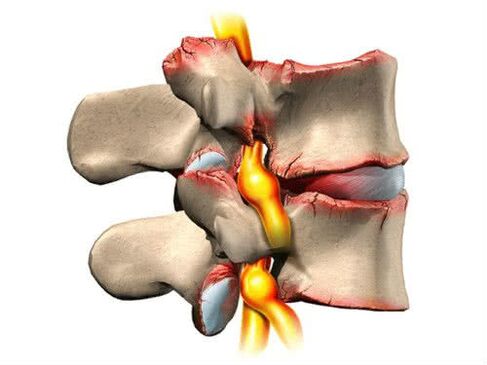
Osteochondrosis is a degenerative process that occurs in articular cartilage and adjacent bone tissue.Doctors define this disease as a degenerative-destructive change in the vertebrae and discs: they lose moisture, height and flexibility decrease.
Osteochondrosis "looked younger"
If a few decades ago the articular cartilage began to deteriorate in those who had crossed the 40-year mark, today the disease also occurs in adolescence.
Doctors name several reasons for this unpleasant tendency.An unhealthy lifestyle, together with an unfavorable environmental situation and a deteriorating standard of living, causes premature wear and deformation of bone and cartilage structures.
The continuous unnatural body position, sedentary lifestyle, and improper nutrition accompany all people.Few people think about the prevention of osteochondrosis, the neglect of exercise, a balanced diet and, in general, the approach to maintaining their own health.The result of such ignorance is usually sad.
The main causes of osteochondrosis
Experts still debate how many real factors are involved in the development of the disease.Unconditional causes are:
- individual tendency;
- segmental circulatory disorders;
- acquired changes with age;
- damage to the annulus fibrosus;
- overweight;
- permanent loads;
- poor nutrition;
- bad habits;
- failure of the body during menopause;
- sedentary work.
Stages of development of osteochondrosis
Osteochondrosis can be divided into stages, taking into account clinical symptoms, the degree of tissue damage and the degree of patient discomfort.The pathological process consists of four stages:
- Preclinical.First of all, the basic nutritional level of the intervertebral discs decreases, their elasticity and firmness deteriorate.No changes can be detected on X-rays.The patient may experience mild fatigue, mild discomfort, stiffness, dizziness, headache;
- The stage of discogenic radiculitis.The fibrous ring begins to slowly deform (cracks and protrusions appear).The pain becomes sharper and more sudden, the discomfort becomes more noticeable.A symptom like "lumbago" appears, the limbs begin to go numb;
- Vascular-radicular stage.The fibrin ring completely loses its shape.From this moment on, a hernia may develop.X-rays are very informative.Subjective feelings of patients are expressed (pain, sharp pain, constant discomfort).Frequent muscle spasms appear and performance drops sharply.If the nerve fibers suffer, then the first signs of dysfunction of the internal systems are inevitable;
- As the height of the vertebrae decreases, friction begins between them.Osteophytes may appear as a compensatory mechanism.These are specific bone growths that help strengthen the area where the friction was most intense.But osteophytes can trigger inflammatory processes in the surrounding soft tissues, aggravating the pathological picture.
Symptoms of the disease: emphasis is placed on the well-being of patients
Osteochondrosis is characterized by a whole series of very different symptoms.This is due to the extent of the pathological process and the effect on most organs of the human body.Several main syndromes are manifested in patients with osteochondrosis:
- Static syndrome.When your vertebrae lose their shape, your posture inevitably changes.Signs of kyphosis, scoliosis and lordosis appear.Discomfort is accompanied by a feeling of stiffness;
- Neurological syndrome.Damage to nerve tissue leads to paresthesia (deterioration of sensitivity) in various zones, accompanied by numbness, tingling, "crawling" sensations;
- Vascular syndrome.Due to the compression (squeezing) of the large vessels and capillaries by the deformed vertebrae, the blood circulation is interrupted.Result: nausea, dizziness, pallor, signs of oxygen starvation;
- A symptom of trophism.As tissue nutrition is interrupted (due to compression of small blood vessels), trophic ulcers may appear on the surface of the skin.
Cervical osteochondrosis
The first manifestation of cervical osteochondrosis is a headache.Painkillers do not relieve pain.Typically, the pain begins in the parietal zone and flows smoothly into the temporal region.Over time, the patient feels discomfort and numbness in the shoulder girdle.
Due to impaired blood supply to the brain, the person may experience dizziness, nausea and increasing tinnitus.If the nutrition of the optic zone is interrupted, visual acuity usually drops sharply.
Elderly people may suddenly lose consciousness and have memory and coordination difficulties.Rare symptoms include shortness of breath, anxiety and hiccups.
Thoracic osteochondrosis
The chest region is the least commonly affected.One of the main reasons for the appearance of pathology is scoliosis and improper desk work (sitting).The patient feels a dull aching pain from the beginning of the disease.As the disease progresses, it causes additional symptoms: chest pain, numbness, paresthesia, aching pain in the area of the liver and kidneys.
During the differential diagnosis, the deformation processes of the chest region can be confused with myocardial infarction and intercostal neuralgia.This ECG and a more thorough examination (absence of cyanosis, pallor, pallor of the skin) make it possible to make an accurate diagnosis.
Lumbosacral osteochondrosis
The most common type of osteochondrosis.This is due to the fact that this area of the spine bears the greatest load.Most often, hernias occur here, which complicates the clinical picture.
The main symptoms are: long-lasting pain, feeling of muscle pain, discomfort, rare lumbago, paresthesia, which disappears from time to time and then reappears.The sensitivity of the skin on the feet, legs and thighs can vary.
A common cause of osteochondrosis in this department is trauma, mechanical compression, and heavy physical activity.One of the most unpleasant consequences of lumbosacral deformities is the "slippage" of the vertebra and dysfunction of nearby organs.
What pains will you talk about in osteochondrosis
Depending on where the deformation processes occur most intensively, the nature and specificity of the pain depends.The main feature: damaged vertebrae pinch the nerve roots, causing pain in the area that the nerve plexuses are responsible for.
The problems are divided as follows:
- neck region - headache, stiff neck and shoulders, disturbances of vision, breathing and other important functions;
- Chest region - pain in the heart, lumbago in the arm and internal organs, impaired digestive function, arrhythmias, problems in the functioning of the endocrine system.The pain is always strong and sharp;
- Lower back - pain, constant pain, failure of the urogenital system, congestion in the pelvis, reproductive dysfunction.
Diagnosis of osteochondrosis
The doctor must collect as complete an anamnesis as possible.During the examination, the specialist feels the areas where the pain is most pronounced.
The x-ray examination will be informative.Especially in the last stages of the disease.
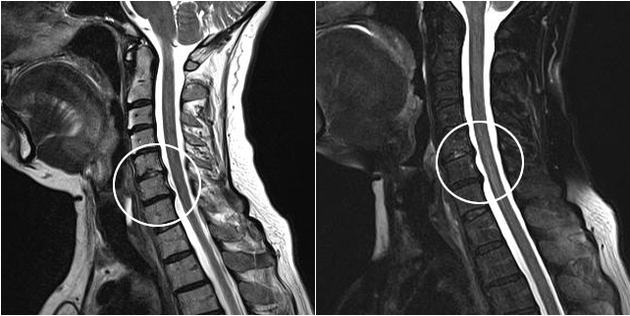
Modern diagnostic methods include MRI and CT, which allow for the most accurate examination of cartilage and bone tissue destruction processes.In addition, this technique is convenient for diagnosing hernia and other soft tissue defects near the source of the disease.
An ECG is used for the differential diagnosis of osteochondrosis of the thoracic region.The patient should have a general blood and urine test.
Work on a computer and the development of osteochondrosis
Osteochondrosis is an insidious disease.It affects both the "office planktons" who are constantly sitting in front of the computer, as well as the inveterate workers who expose their health to extreme stress.Irrational work, ignoring the rules for the prevention of osteochondrosis and an unhealthy lifestyle cause the rapid destruction of bone and cartilage tissue.
The generation of modern youth is too "computerized".Many health professionals cite this as one of the main reasons why osteochondrosis has become so common and affects very young people.Top tips from experts:
- It is necessary to monitor your posture and position at your desk;
- Even during hard work, it is important to take a break and "stretch" the body;
- You can't stand the discomfort of sitting in front of the computer.The body, especially the back, should be comfortable;
- Active lifestyle.Alternate work or free time spent at the computer with sports recreation or light gymnastics.
Bad lifestyle
An unbalanced diet leads to osteochondrosis.Junk food attacks on several "fronts" at the same time.First, obesity caused by fast food and similar snacks is one of the root causes of spinal dysfunction.And the salts and other harmful elements deposited in the bones only aggravate the problem, accelerating the destructive processes.
Alcohol and smoking have similar effects.Harmful substances affect the cellular level and have a destructive effect on bone tissue and cartilage surfaces, which are the most sensitive to nicotine.
By reviewing your lifestyle, diet and eliminating bad habits, you can prevent the appearance or progression of osteochondrosis.The ability to move easily and freely is a real luxury, a gift of nature for all people.Unfortunately, the value of pain-free movements only becomes clear when the pathological process immobilizes the human body.
Taking care of your health today means a happy, fulfilling life in the future.